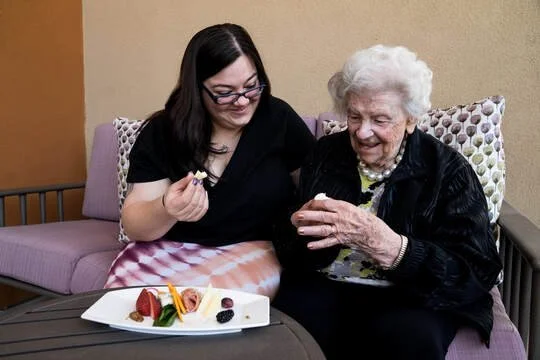
Assisted living Could Provide Benefits for Your Aging Parent

As people enter their twilight years, they encounter unchartered territory. Many are faced with losing spouses, family and friends, as well as their strength, health and mobility. They may fear losing their independence; and worry about losing control over life decisions and their dignity.  

If they do require help running their household or with personal care, family members may not be nearby to lend a hand or are busy raising their families, and/or pursuing their career. As a loved one concerned about their well-being, it may be time to introduce the idea of assisted living as a way for them to maintain their independence and regain control over their life.  

If your family is new to the concept of assisted living, the Internet offers resources on the options and how to find the right community for mom or dad’s needs and interests. You can help them discover the benefits of living with a group of their peers, having compassionate daily caregivers, and the freedom and choices community living provides. 

It offers increased safety and security, and peace of mind for both residents and families. As a resident, they will have personalized care, nutritional support, and access to transportation and healthcare.

If you live in the Denver area, we encourage you to consider MorningStar at Jordan. Our website offers information regarding our community as well as our parent company, MorningStar Senior Living. Additionally, you will find conversation starters to help you introduce the idea of assisted living with your parents. 

MorningStar at Jordan offers spacious suites available in studio, one-bedroom and two-bedroom floor plans. Residents enjoy luxury amenities, senior care services, and a calendar full of wellness programs and activities. Amenities include chef-inspired meals, restaurant-style dining, fitness center, salon, theater, fireside patio and more. In addition, our distinct Reflections Neighborhood provides compassionate, experienced dementia care.  Please contact us for more information. 

MorningStar has considered it a privilege and responsibility to “cast a new light” on senior living, inspired and empowered by our unique mission: to honor, to value, to invest. Our passionate commitment to serving seniors has proudly earned us a reputation for satisfaction that is second to none. Contact us to learn more about the finest dementia care in Centennial, Colorado.

Balance Problems Are Common in Older Adults

The statistics of older adults taking a fall each year are alarming, and consequences can impact the person’s independence, or in the worst case, be deadly. Experts say as we age, our bodies may start to feel less stable due to things like a loss of muscle mass, lack of flexibility and slower reflexes. Poor balance and dizziness can also be a result of medical problems including diabetes, heart disease, stroke, poor vision, thyroid, nerves, or blood vessels as well as medications. 

Another culprit interfering with balance is inner ear problems. The labyrinth is a part of the inner ear that controls balance and when it becomes inflamed or infected, it can cause lots of problems including vertigo. The condition called Labyrinthitis generally is a result of other issues such as head injuries, viral or bacterial infections, and circulatory system conditions like strokes or low blood pressure. 

The National Institute on Aging says families and caregivers should be on the lookout for an older person complaining of unsteadiness; the feeling the room is spinning or moving; confusion; blurry vision; and falling. To determine the cause of the symptoms of lightheadedness or dizziness as well as the best treatments available, consult with your doctor, and if needed, seek the care of a specialist.

Your doctor can provide information regarding exercises targeted at improving balance, strengthening muscles and increasing flexibility. The Harvard Medical School reports walking can help build lower-body strength, an important element of good balance and is safe for most people but be sure to check with your healthcare provider.

Along with getting medical care for balance issues, experts say avoid walking in dimly lit or dark spaces, wear properly fitted footwear, and use a cane or walker if you need more support. Your home should be modified with handrails in the bathroom and more lights on stairways. Repair loose railings and uneven porch steps; and remove floor mats that affect elevation.   

At MorningStar at North Ridge, dementia care, we know it is important for our residents to stay as active as possible, which is why our calendar includes exercises designed to help residents improve their strength, flexibility, and balance.  Our loving memory care community is designed to address the unique needs of our tender residents to ensure their safety and comfort. Specialized care includes finding ways to connect with and nurture the essence of the individual, and to celebrate and elevate life.  Please see our website to learn more.

MorningStar has considered it a privilege and responsibility to “cast a new light” on senior living, inspired and empowered by our unique mission: to honor, to value, to invest. Our passionate commitment to serving seniors has proudly earned us a reputation for satisfaction that is second to none. Contact us for more information about the finest memory care facility in Albuquerque, NM.

Strategies to Minimize Fall Risk

The Centers for Disease Control and Prevention (CDC) reports 1 in 4 Americans aged 65 years or older report falling every year. However, medical professionals say while it is important for seniors to take precautions to prevent falls as injuries can be serious, they also remind us that regardless of how old we are, it is beneficial for our overall health to keep moving.  Experts explain that failing to engage in “mild exercise on a regular basis results in reduced muscle mass and strength (sarcopenia), decreased bone mass, poor balance and coordination, and reduced flexibility.” 

They go on to say that despite commonly held beliefs, falls are not a normal part of aging and there are things you can do to help keep you on your feet and mitigate the risk of a fall.  Their first piece of advice is to talk to your doctor about your risk and prevention.  Tell them if you have fallen and discuss your medications to see if side effects include dizziness or sleepiness that could contribute to falls.  

While falls are common in older adults, individuals with dementia are at an even greater risk.  Researchers say there are several reasons for this including gait and balance issues as well as problems concentrating and staying focused on the task at hand.  Other issues that may increase the risk of falls include poor eyesight and chronic diseases such as Parkinson’s, and arthritis or numbness in the feet.  If you often feel dizzy or lightheaded upon standing or suddenly sitting up, ask your doctor if you might have postural hypotension, and find out how you can alleviate the symptoms.    

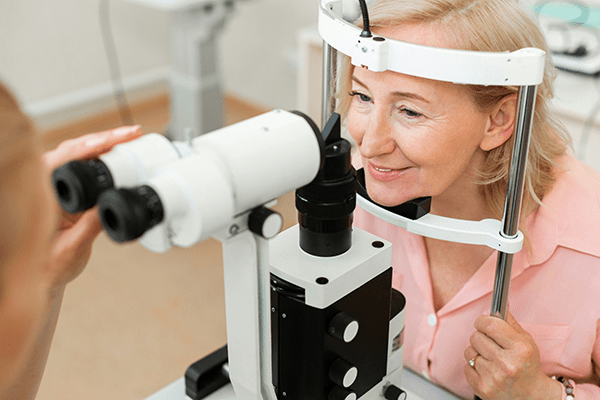
Further tips to reduce your risk include having your eyes checked annually and updating your glasses when needed.  In addition, talk to your doctor about the best footwear for inside the house as well as outside.  Check your home for trip hazards (the CDC has a list of tips) and install grab bars in the bathroom.  Finally, ask your doctor about exercises to strengthen your leg muscles as well as balance-training exercises to improve balance.   

At MorningStar at Jordan, our community is designed to accommodate our residents’ every need and to see to their comfort as well as their safety.  Each of our suites is equipped with a 24-hour emergency call system, handicapped-accessible bathroom and we offer SafelyYou technology which uses artificial intelligence (AI) to detect and prevent falls for memory care residents. We also recognize the importance of exercising, and as such, provide a full calendar of activities that includes a variety of exercise programs.  For more information about MorningStar’s assisted living or dementia care in Centennial, Colorado please visit our website or give us a call.

MorningStar’s foundation is based on the mission to honor God, value seniors and invest in our staff to create a unique senior living experience.  Set in a warm, loving atmosphere with beautiful surroundings and resort-style amenities, we provide exceptional assisted livingand memory care.  Please contact us to discover why MorningStar at Jordan dementia care is a great place to call home.

Sources:  cdc.gov/injury/features/older-adult-falls/, agingcare.com/articles/falls-in-elderly-people-133953.htm

alzinfo.org/articles/diagnosis/alzheimers-disease-increases-the-risk-of-falls/

Medical Errors Are Third Leading Cause of Death in the United States

The US News & World Report writes that medical errors are more common than we think; and some of them are life-alternating or deadly. Facts show medical errors are the third leading cause of death in the United States. These include mistakes made in health care settings such as incorrect diagnoses, problems in surgery, operating on the wrong part of the body and incorrectly dispensing medications. Another devastating mistake can result in patients acquiring infections during their hospital stay from things like inadequate hand hygiene and improper wound care.

Dr. Kanwar Kelley, a board-certified otolaryngologist and cofounder and CEO of Side Health, explains, “Most medical errors – regardless if they are diagnostic errors, medication errors or surgical errors – can be linked to issues in medical processes or workflows.”

While most mistakes happen within the healthcare system and it is neither our responsibility or within our reach to prevent many of these errors, there are things we can do to try and protect ourselves. The first thing experts say is to get as informed as possible about your medical problem. This includes asking questions about treatment options, and how long you will be on any new medication you are prescribed. Ask about potential side effects and make sure you know exactly how to take the medication. If you are not happy with what you hear or with the doctor, you are entitled to seek a second opinion.

Your responsibility includes communicating with your healthcare team about all medications you are taking including over-the-counter drugs and herbal supplements. In addition, provide a comprehensive medical history of diseases, cancers, surgeries and other problems you have had over the years.   

At MorningStar at Jordan, our beautiful community offers a host of amenities, care services and wellness programs as well as activities to live life to the fullest.  Located in historic Centennial, Colorado, MorningStar offers 55 assisted living suites in a choice floor plans that just need your furnishings and personal treasures to make it feel like home.  In addition, our Reflections Neighborhood has 29 memory care suites devoted to the individualized care of those with Alzheimer’s and other dementia-related diseases.  Please contact us or visit our website for more information on dementia care.

MorningStar has considered it a privilege and responsibility to “cast a new light” on senior living, inspired and empowered by our unique mission: to honor, to value, to invest. Our passionate commitment to serving seniors has proudly earned us a reputation for satisfaction that is second to none. Contact us to learn more about the finest assisted living and memory care in Centennial, Colorado.

Source: health.usnews.com/wellness/articles/how-to-prevent-medical-errors?

Just Three Nights of Poor Sleep Can Negatively Impact Your Heart Health

In recent years researchers have focused on the many benefits of a good night’s sleep. Now a study appearing on the Medical News Today websitereports that even three consecutive nights of poor sleep can adversely affect our health. The study from Uppsala University examined how lack of sleep affects the body, with a focus on heart health. Their finding concluded that biomarkers associated with inflammation and heart health increased after just three nights of little sleep.

Cheng-Han Chen, MD, a board-certified interventional cardiologist and medical director of the Structural Heart Program at MemorialCare Saddleback Medical Center, said the results are not surprising as poor sleep can negatively impact numerous health factors. In addition to cardiovascular health, he explains it can negatively impact endocrine and immune functioning.

With an abundance of research regarding the importance of sleep, what can people who have problems getting to sleep or sleeping through the night do to improve sleep patterns? Suggestions include adopting better sleep habits like reducing nicotine and caffeine along with limiting blue light devices several hours before bedtime, adopting routine bedtimes, and keeping the room dark.

Using a sleep tracker may also help you to understand your sleeping behavior and detect trends in your sleep cycle; and if appropriate, the data can be shared with your doctor. Sleep trackers generally use an instrument called an accelerometer to track movement and an algorithm interprets the data to provide an overview of a person’s sleep patterns. Some devices also include a heart rate monitor. A 2018 study suggests that sleep trackers can accurately track total sleep time and time spent in bed. However, while not as effective as sleep studies in detecting when people wake up, researchers say “sleep trackers are a valid way for people to track their sleeping habits and note that these devices may become more accurate as technology advances.”

The devices can also help identify possible health issues such as sleep apnea, lung disease, heart disease and diabetes. It is important to note sleep disturbances can also play a role in the onset or exacerbation of various mental health conditions like anxiety, depression and bipolar disorder. Talk to your healthcare provider about ongoing sleep problems.

MorningStar at North Ridge offers families trusted, compassionate memory care in Albuquerque. We create an individualized care plan for each resident to address personal needs and provide a gentle flow of purposeful activities.  We elevate and celebrate life by trying to connect with and nurture the individual each day, and ensure they are treated with the utmost respect and dignity they deserve.  Please visit our website for more information about our home, our staff and the philosophy that guides our dementia care

MorningStar is guided by a culture rooted in our mission of honoring God, valuing seniors, and investing in our team, which allows us to deliver services with warmth, sincerity and depth of purpose. We have built a reputation for creating homes filled with an atmosphere of love and community. Please contact us to learn more about the finest memory care in Albuquerque, NM.

Dizziness is a Common Complaint for Seniors

Doctors say dizziness is a common complaint of older adults. Symptoms may include vertigo (feels like the room is spinning); light-headedness; faintness and weakness; and nausea. While confusing and uncomfortable to sufferers, experts say it’s rarely a sign of anything serious or life-threatening, and is generally treatable. However, if you experience acute, prolonged dizziness, especially if accompanied by symptoms such as chest pains, passing out and/or severe headache; seek immediate medical attention. 

Most causes of dizziness are from an inner ear disturbance, motion sickness, medications, or other conditions of poor health. To diagnose the problem, your doctor will want to know how long your dizziness lasts and other symptoms you may be having. Medications with the known side-effect of dizziness include ACE inhibitors, beta-blockers and calcium-channel blockers. 

The Mayo Clinic explains that with inner ear disorders your brain receives signals from the inner ear that aren’t consistent with what your eyes and sensory nerves are receiving. Vertigo may result as the brain works to try and sort out the confusion. One common inner ear problem is benign paroxysmal positional vertigo (BPPV). The condition comes on with sudden movements of the head that cause vertigo and is treated with certain maneuvers and medications like meclizine (an antihistamine used to treat motion sickness and dizziness).

Meniere’s disease is another inner ear condition and is the result of a fluid built-up in the inner ear. Symptoms include long-term vertigo caused by things like too much salt in the diet, coffee, alcohol and stress, as well as viral infections and congestion. Treatment includes altering your diet and medications to relieve fluid build-up.    

Dizziness can also be caused by migraines, neurological conditions, dehydration, low blood sugar and other conditions. It is important to remember that dizziness can increase your risk for a fall. If the condition persists, talk to your doctor who can help narrow down the causes of your dizziness and prescribe the appropriate treatment. 

MorningStar at North Ridge offers exceptional dementia care in Albuquerque.  Our unique approach to care includes finding ways to connect with and nurture the individual essence of each resident, and our energy is put toward finding ways to celebrate and elevate life.  Along with individualized care plans, residents receive 24-hour care, daily health monitoring, access to a full-time nurse, and participate in wellness programs and activities tailored to their special needs.For memory care, please contact us or visit our website for more information.

MorningStar at North Ridge brings a unique vision to senior living with our mission statement “to honor, to value, to invest.” With a foundation built on honoring God, valuing seniors and investing in a staff with a felt calling to serve, we offer loving, compassionate care within a beautiful home-like setting.  Please contact us to learn more about the finest memory care in Albuquerque, NM.

Source: mayoclinic.org/diseases-conditions/dizziness/symptoms-causes/syc-20371787